

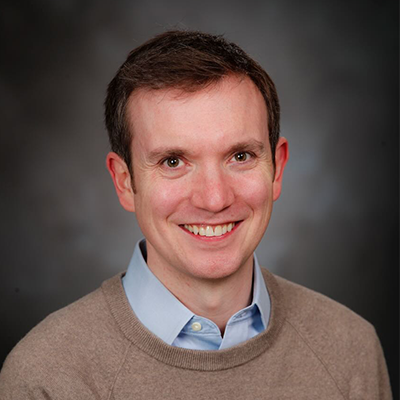
Mark Bell is an associate professor of Political Science at the University of Minnesota. His research examines issues relating to nuclear weapons and proliferation, international relations theory, and US and British foreign policy. His first book, Nuclear Reactions: How Nuclear-Armed States Behave, examines how states change their foreign policies when they acquire nuclear weapons, was published in 2021 by Cornell University Press and won the International Studies Association Foreign Policy Analysis Section's best book award. Other work has been published in journals including International Organization, International Security, International Studies Quarterly, Journal of Conflict Resolution, Journal of Strategic Studies, Texas National Security Review, The Washington Quarterly, and Defence Studies, and has been funded by organizations including the Stanton Foundation, the US Air Force Academy and Defense Threat Reduction Agency, the Smith Richardson Foundation, the Charles Koch Foundation, and the Tobin Project.
Bell holds a PhD in Political Science from the Massachusetts Institute of Technology, a Masters in Public Policy from Harvard Kennedy School, where he was a Frank Knox Memorial Fellow, and a B.A. in Politics, Philosophy, and Economics from St. Anne's College, Oxford University.
Contact: msbell@umn.edu | Website
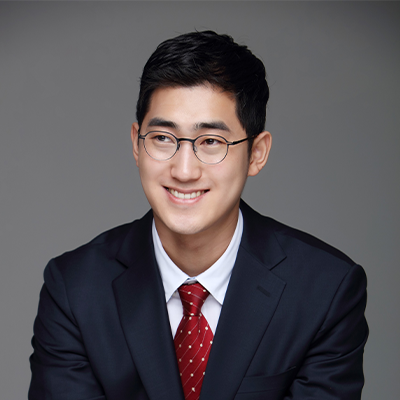
Joshua Byun is an Assistant Professor of Security Studies at Georgetown University’s Walsh School of Foreign Service. He was a 2025-2026 Stanton Nuclear Security Fellow in the MIT Security Studies Program. He was previously an Assistant Professor of Political Science at Boston College. His research focuses on questions related to grand strategy, alliance politics, and nuclear weapons. Joshua’s first book, under contract with Cornell University Press (Cornell Studies in Security Affairs series), examines the success and failure of grand strategy in the context of military alliances. It argues that a leading power may fail to promote its desired military capabilities among smaller allies because the demands of its grand strategy clash with the risks presented to the allies by a hostile great power that is scrutinizing the alliance’s actions. When push comes to shove, allies must calibrate their military choices primarily with an eye toward how vulnerable they are to the adversary’s countermeasures, even if this means frustrating the leading power’s grand strategic plans.
Joshua’s broader research interests center on topics such as preventive war, the relationship between power politics and international norms, and the performative uses of violence by state and nonstate actors. Some of his research has appeared in outlets such as the American Political Science Review, International Studies Quarterly, Texas National Security Review, and Contemporary Security Policy. His policy commentary has been featured in forums like Foreign Affairs and Foreign Policy. Joshua received his Ph.D. in Political Science from the University of Chicago in August 2022. Prior to beginning his academic career, he served as the personal interpreter to South Korea’s Chairman of the Joint Chiefs of Staff.
Contact: jbyun124@mit.edu

Christopher Clary is an associate professor of Political Science at the University at Albany. His research focuses on the sources of cooperation in interstate rivalries, the causes and consequences of nuclear proliferation, US defense policy, and the politics of South Asia.
Previously, he was a postdoctoral fellow at the Watson Institute for International and Public Affairs at Brown University (2015-2016), a predoctoral fellow at the Belfer Center for Science and International Affairs at Harvard University (2014-2015), a Stanton Nuclear Security Predoctoral Fellow at the RAND Corporation (2013-2014), and a Council on Foreign Relations International Affairs Fellow in India (2009). Clary also served as country director for South Asian affairs in the Office of the Secretary of Defense (2006–2009), a research associate at the US Naval Postgraduate School in Monterey, California (2003–2005), and a research assistant at the Henry L. Stimson Center in Washington, DC (2001–2003).
Christopher received his PhD in Political Science at MIT, MA in national security affairs at the Naval Postgraduate School, and BA in history and international studies from Wichita State University.
Contact: cclary@albany.edu

Fiona Cunningham is an Assistant Professor of Political Science at the University of Pennsylvania. Her research interests lie at the intersection of technology and conflict, with an empirical focus on China. Fiona’s first book, Under the Nuclear Shadow: China’s Information-Age Weapons in International Security (Princeton University Press, 2025) examines China’s distinctive approach to the dilemma of coercing an adversary under the shadow of nuclear war, which relies on cyberattacks, counterspace capabilities, and precision conventional missiles as substitutes for nuclear threats. Her research has been published in International Security, Security Studies, Journal of Strategic Studies, Texas National Security Review, and has received funding from organizations including the Stanton Foundation, Ploughshares Fund, and the Smith Richardson Foundation.
Fiona held fellowships at the Renmin University of China in Beijing, the Belfer Center at Harvard University, the Center for International Security and Cooperation at Stanford University, and the Carnegie Endowment for International Peace.
Fiona received her Ph.D. in Political Science from MIT in 2018. From 2019 to 2021, she was an Assistant Professor of Political Science and International Affairs at the George Washington University.
Contact: fionasc@sas.upenn.edu | Website
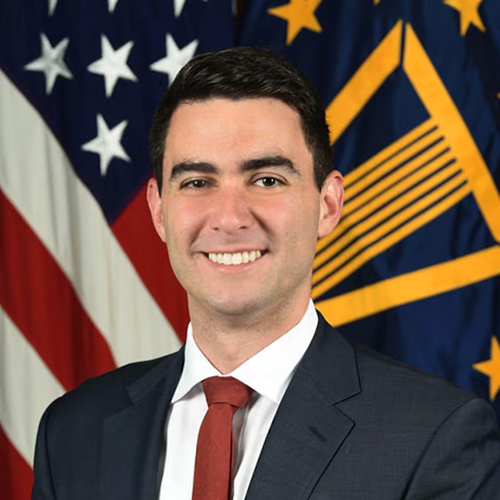
Dr. Matthew Daniels is a technology and policy leader in Washington and New York. He has held technical, leadership, and strategy roles at the White House, NASA, and Department of Defense. His work focuses on space security and technology strategy. He is a member of the Council on Foreign Relations and continues to teach on space security and exploration.
Matt started as an engineer at NASA in California, received his Ph.D. from Stanford, and was a fellow at Stanford's Center for International Security and Cooperation. He has twice been a recipient of Department of Defense Distinguished Service medals. For his work on planetary defense, Asteroid 22028 Matthewdaniels, discovered by the Catalina Sky Survey, is named for him.
Dr. Florian Galleri is a historian specializing in contemporary military and strategic studies, with a focus on nuclear deterrence and European security. He was a 2025-2026 Stanton Nuclear Security Fellow in the MIT Security Studies Program. He. He earned his PhD in Contemporary History, analyzing the European dimension of French nuclear deterrence after the Cold War. He has participated in international research programs, published on strategic issues, and taught at the University of Nantes. His work explores nuclear doctrines, Franco-European defense relations, and strategic decision-making.
Contact: galleri@mit.edu

Nicholas L. Miller is an Associate Professor of Government at Dartmouth College. His research focuses on nuclear weapons proliferation and has been published in a variety of scholarly journals, including the American Political Science Review, International Organization, International Security, International Studies Quarterly, and Security Studies. His book manuscript, Stopping the Bomb: The Sources and Effectiveness of U.S. Nonproliferation Policy, was published by Cornell University Press in 2018. Miller’s commentary on public affairs has appeared at in Foreign Affairs, Lawfare, The National Interest, Politico, War on the Rocks, and The Washington Post’s Monkey Cage.
He received his PhD in Political Science from MIT. From 2014 to 2017, he was an Assistant Professor of Political Science at Brown University.
Contact: nicholas.l.miller@dartmouth.edu| Website
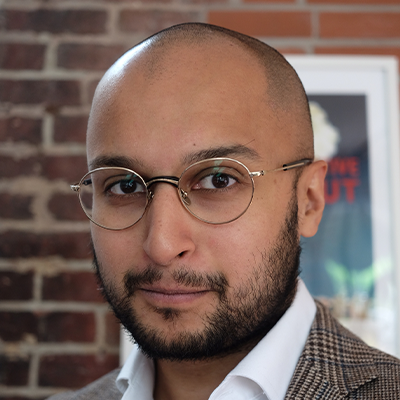
Ankit Panda is the Stanton Senior Fellow in the Nuclear Policy Program at the Carnegie Endowment for International Peace. His research interests include nuclear strategy, escalation, missiles and missile defense, space security, and U.S. alliances. He is the author of The New Nuclear Age: At the Precipice of Armageddon (Polity, 2025), Indo-Pacific Missile Arsenals: Avoiding Spirals and Mitigating Risks (Carnegie, 2023), and Kim Jong Un and the Bomb: Survival and Deterrence in North Korea (Hurst/Oxford, 2020). Panda is co-editor of New Approaches to Verifying and Monitoring North Korea’s Nuclear Arsenal (Carnegie, 2021).
Panda has consulted for the United Nations in New York and Geneva, and his analysis has been sought by U.S. Strategic Command, Space Command, and Indo-Pacific Command. Panda is among the most highly cited experts worldwide on North Korean nuclear capabilities. He has testified on matters related to South Korea and Japan before the congressionally chartered U.S.-China Economic and Security Review Commission. Panda has also testified before the U.S. Senate Subcommittee on Strategic Forces. Before joining Carnegie, Panda was an adjunct senior fellow at the Federation of American Scientists and a journalist covering international security.
Panda is a frequent expert commentator in print and broadcast media around the world on nuclear policy and defense matters. His work has appeared in or been featured by the New York Times, the New Yorker, the Economist, the Washington Post, Foreign Affairs, Foreign Policy, the Bulletin of the Atomic Scientists, the Atlantic, the New Republic, the South China Morning Post, Politico, and the National Interest. Panda has also published in scholarly journals, including Survival, the Washington Quarterly, and India Review, and has contributed to the IISS Asia-Pacific Regional Security Assessment and Strategic Survey. He is editor-at-large at the Diplomat, where he hosts the Asia Geopolitics podcast, and a contributing editor at War on the Rocks, where he hosts Thinking the Unthinkable With Ankit Panda, a podcast on nuclear matters.
Contact: ankit.panda@ceip.org

Reid Pauly is an Assistant Professor of Political Science at Brown University and the Dean’s Assistant Professor of Nuclear Security and Policy at the Watson Institute for International and Public Affairs. He studies nuclear proliferation and nuclear strategy, coercion, and secrecy in international politics. Pauly is the author of The Art of Coercion: Credible Threats and the Assurance Dilemma (Cornell University Press, 2025). His scholarship has also been published in International Security, International Studies Quarterly, the European Journal of International Relations, and Foreign Affairs.
Pauly earned his Ph.D. from MIT and has held fellowships at the Harvard Kennedy School’s Belfer Center for Science and International Affairs and Stanford University’s Center for International Security and Cooperation. He is also a fellow with the Schmidt Futures International Strategy Forum.
Contact: reid_pauly@brown.edu
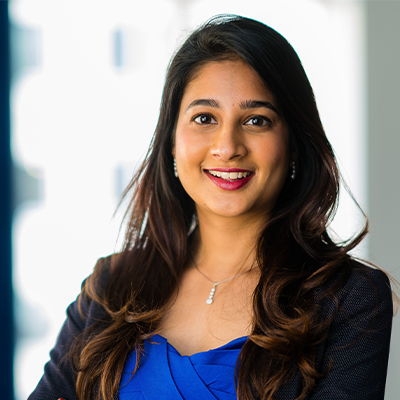
Beenish Pervaiz is a Postdoctoral Fellow in Technology and International Security at the UC Institute on Global Conflict and Cooperation. She was a 2025-2026 Stanton Nuclear Security Fellow in the MIT Security Studies Program. She earned her Ph.D. in Political Science from Brown University in 2025. Her research focuses on nuclear politics, force structure development, and the influence of external actors on South Asian security dynamics. She previously served as a Predoctoral Research Fellow with the Project on Managing the Atom and the International Security Program at Harvard Kennedy School’s Belfer Center from 2024 to 2025. Her work has been supported by the USIP–Minerva Peace and Security Scholar Fellowship (2023–2024) and Brown University’s Saxena Center for Contemporary South Asia. She holds a Master’s in International Policy Studies from Stanford University, specializing in international security and cooperation, and has contributed to international security policy through roles with the Nuclear Threat Initiative and the Comprehensive Nuclear-Test-Ban Treaty Organization.
Contact: bpervaiz@mit.edu
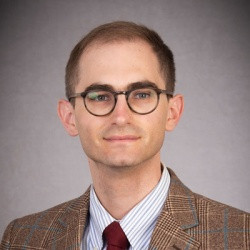
Erik Sand is an Assistant Professor in the Strategic and Operational Research Department at the U.S. Naval War College's Center for Naval Warfare Studies. His primary area of research focuses on the intersection of security and political economy, specifically how states manage the sources of their national power in their relations with other states and how they react to attacks on those sources. His book project uses archival sources to explore when states choose to share advanced military technology with other states, and - more broadly - how states view technology as a component of their own power. In separate work, he analyzes how states react to campaigns of economic isolation. His other research interests include grand strategy, deterrence, escalation, and naval issues.
He earned his PhD from the MIT Political Science Department where he was a member of the Security Studies Program. In 2020-2021, he was an America in the World Pre-Doctoral Fellow in the Henry A. Kissinger Center for Global Affairs at the John Hopkins School of Advanced International Studies. Prior to his studies at MIT, he served as a nuclear-propulsion-qualified active-duty service warfare officer in the U.S. Navy, and continues to serve in the Navy Reserve. He holds a Masters of Engineering Management from Old Dominion University and Bachelors in History from Harvard University.
Contact: esand@mit.edu | Website
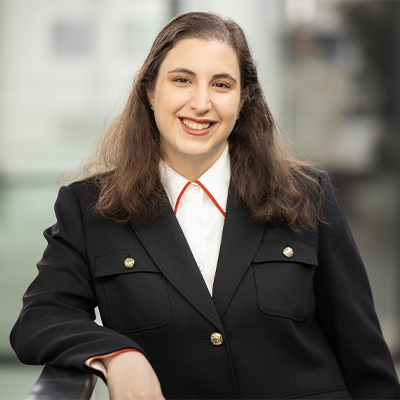
Dr. Lauren Sukin is the John G. Winant Associate Professor in U.S. Foreign Policy in the Department of Politics and International Relations at the University of Oxford, as well as a Professorial Fellow in Nuffield College at the University of Oxford. Dr. Sukin's research examines historical and contemporary challenges in international security, focusing particularly on the role of technology—including nuclear weapons—in alliances.
Dr. Sukin's research has been published in a variety of scholarly journals, including: Security Studies, International Studies Quarterly, Journal of Peace Research, Journal of Conflict Resolution, Perspectives on Politics, European Journal of International Security, Contemporary Security Policy, and International Interactions. Her research has received funding from organisations including: The Stanton Foundation, Carnegie Corporation of New York, Ploughshares, and Schmidt Futures. Dr. Sukin has published commentary in Foreign Affairs, Foreign Policy, The Washington Post, and War on the Rocks, among other outlets.
Dr. Sukin is a Nonresident Scholar in the Nuclear Policy Program at the Carnegie Endowment for International Peace and a fellow at Charles University's Peace Research Centre Prague. She has held fellowships and visiting chairs at Stanford University’s Center for International Security and Cooperation, MIT’s Security Studies Program, Hertie School's Center for International Security, LSE’s Phelan United States Centre, Schmidt Futures’ International Strategy Forum, and Bulletin of the Atomic Scientists’ Nuclear Risk Section. She holds a Ph.D. and M.A. from the Department of Political Science at Stanford University and A.B.s in political science and literary arts from Brown University.
Contact: lauren.sukin@politics.ox.ac.uk | Website
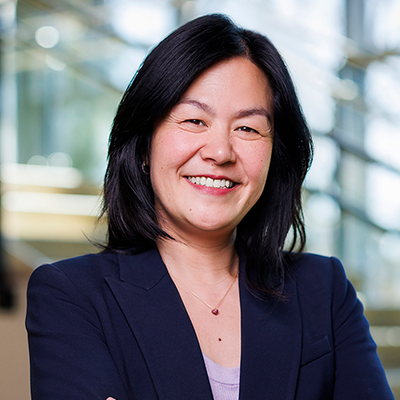
Evelyn N. Wang is the MIT Vice President for Energy and Climate. Appointed by President Sally Kornbluth in January 2025, Dr. Wang came to the role after several years as serving the nation as the director of the Advanced Research Projects Agency-Energy (ARPA-E) of the U.S. Department of Energy.
The Ford Professor of Engineering at MIT, Dr. Wang earned her undergraduate degree at MIT in mechanical engineering, then returned to her home state of California to attend Stanford University for her SM and PhD. Following a postdoc stint at Bell Labs, Evelyn joined the MIT faculty, where she built a record of leading-edge innovations. An internationally recognized leader in phase change heat transfer on nanostructure surfaces, Dr. Wang’s research focuses on high-efficiency energy and water systems. Her work on solar cells that convert heat into focused beams of light was named as one of MIT Technology Review’s 10 breakthrough technologies of 2017. Her work on the development of a device that can extract fresh water from the air in arid environments was selected by Scientific American and the World Economic Forum as one of 2017’s 10 promising emerging technologies.
As director of the Device Research Lab, Dr. Wang held several professorships, ultimately being named Ford Professor of Engineering. In 2018, she became department head of MIT Mechanical Engineering, a role she held until she left the Institute to lead ARPA-EIn 2021, Dr. Wang was elected a Fellow of the American Association for the Advancement of Science and in 2023 a Fellow of the American Academy of Arts and Sciences. In 2015, the American Society of Mechanical Engineering also honored her as a Fellow, and in 2017 presented her with the Gustus L. Larson Memorial Award for outstanding achievement in mechanical engineering.
Contact: enwang@mit.edu | Admin Contact: derek978@mit.edu
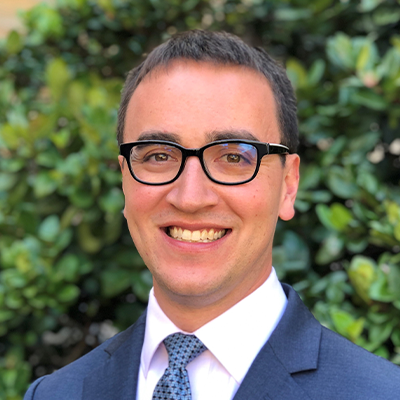
John Kawika Warden is a Senior Deterrence Analyst at the Center for Global Security Research at Lawrence Livermore National Laboratory. His areas of focus include U.S. defense strategy and foreign policy; nuclear weapons and deterrence; escalation, stability, and arms control; and technology and the future of warfare. Mr. Warden has previously served as the Director for Strategic Stability and Arms Control at the National Security Council, on the professional staff of the House Armed Services Committee, as a Research Staff Member at the Institute for Defense Analyses, as a Senior Policy Analyst at Science Applications International Corporation, as a Senior Fellow at Pacific Forum, and as a Program Coordinator at the Center for Strategic and International Studies. He holds an M.A. in Security Studies from Georgetown University and a B.A. in Political Science and History from Northwestern University.
Contact: jkwarden@mit.edu| Website

Rachel Whitlark is an Associate Professor in the Sam Nunn School of International Affairs at the Georgia Institute of Technology. She is a nonresident senior fellow in the Forward Defense practice of the Atlantic Council’s Scowcroft Center for Strategy and Security and a Senior Fellow with the Bridging the Gap Project. Previously, she was a Post-Doctoral Research Fellow with the Project on Managing the Atom and International Security Program within the Belfer Center for Science and International Affairs at Harvard University’s Kennedy School of Government and a Stanton Nuclear Security Fellow at MIT’s SSP.
Whitlark's scholarship examines nuclear proliferation, counterproliferation, and foreign policy decision-making, with a focus on the role of the individual executive in foreign and security policy, as well as on nuclear technology, nuclear proliferation, and counter-proliferation. I have regional interests in the Middle East and East Asia.
She received a PhD in Political Science from George Washington University.
Contact: rachel.whitlark@inta.gatech.edu | Website

Heather Williams is the director of the Project on Nuclear Issues (PONI) and a senior fellow in the Defense and Security Department at the Center for Strategic and International Studies (CSIS). She is a member of the Defense Science Board and State Department International Security Advisory Board. She is also a Senior Associate Fellow with the Royal United Services Institute in London. Before joining CSIS Dr. Williams was a visiting fellow with the Project on Managing the Atom in the Belfer Center at the Harvard Kennedy School, and a Stanton Nuclear Security fellow in the Security Studies Program at MIT. Until 2022, she was a senior lecturer (associate professor) at King’s College London, served as a specialist adviser to the House of Lords International Relations Committee, and was President of Women in International Security (WIIS) UK.
Dr. Williams has a PhD in war studies from King’s College London, an MA in security policy studies from the George Washington University, and a BA in international relations and Russian studies from Boston University.
Contact: hwwilliams@csis.org