

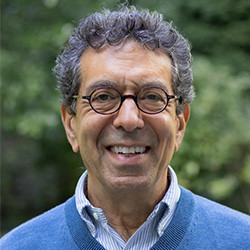
Charles L. Glaser is a Senior Fellow in the MIT Security Studies Program. His research focuses on international relations theory and international security policy, including U.S. policy toward China, nuclear weapons policy, and U.S. energy security. His most recent book, Retrench, Defend, Compete: Securing America’s Future Against a Rising China, will be published in Fall 2025.
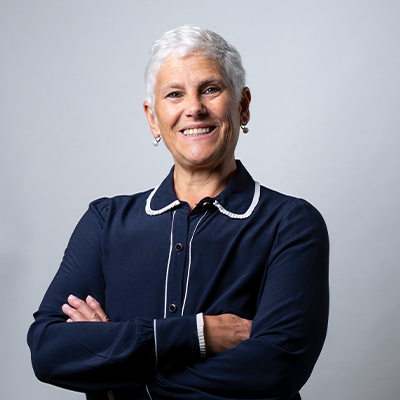
Deborah G. Rosenblum - Former Acting Deputy Under Secretary of Defense for Acquisition and Sustainment, and Former Assistant Secretary of Defense for Nuclear, Chemical and Biological Defense Programs
Deborah Rosenblum has spent over 35 years working in the national security and defense field. Most recently, she served, from 2021 to 2025, as the Senate confirmed Assistant Secretary of Defense for Nuclear, Chemical and Biological Defense Programs as well as the Acting Deputy Under Secretary of Defense for Acquisition and Sustainment. In these roles she was responsible for all matters pertaining to acquisition; contract administration; logistics and materiel readiness; installations and environment; operational energy; chemical, biological and nuclear defense; as well as the defense industrial base. From 2009 through 2021, she served as Executive Vice President at The Nuclear Threat Initiative, a global nonprofit focused on reducing catastrophic risks. She also advised corporate clients as a Vice President at The Cohen Group, a global consulting firm, on business opportunities in the defense and homeland security markets. She was educated at Middlebury College as well as Columbia University.
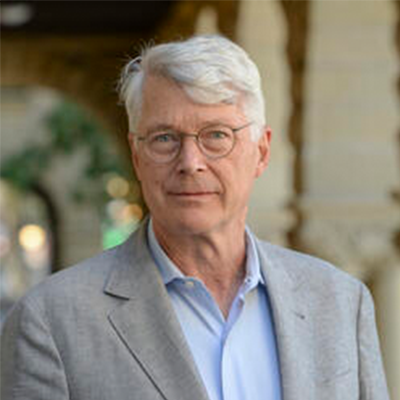
Scott D. Sagan is Co-Director and Senior Fellow at the Center for International Security and Cooperation, the Caroline S.G. Munro Professor of Political Science, and the Bass University Fellow in Undergraduate Education at Stanford University. He also serves as Co-Chair of the American Academy of Arts and Sciences’ Committee on International Security Studies. Before joining the Stanford faculty, Sagan was a lecturer in the Department of Government at Harvard University and served as special assistant to the director of the Organization of the Joint Chiefs of Staff in the Pentagon.
Sagan is the author of Moving Targets: Nuclear Strategy and National Security (Princeton University Press, 1989); The Limits of Safety: Organizations, Accidents, and Nuclear Weapons (Princeton University Press, 1993); and, with co-author Kenneth N. Waltz, The Spread of Nuclear Weapons: An Enduring Debate (W.W. Norton, 2012). He is the co-editor of Insider Threats (Cornell University Press, 2017) with Matthew Bunn; and co-editor of The Fragile Balance of Terror (Cornell University Press, 2022) with Vipin Narang. Sagan was also the guest editor of a two-volume special issue of Daedalus: Ethics, Technology, and War (Fall 2016) and The Changing Rules of War (Winter 2017).
Recent publications include “Kettles of Hawks: Public Opinion on the Nuclear Taboo and Noncombatant Immunity in the United States, United Kingdom, France, and Israel”, with Janina Dill and Benjamin A. Valentino in Security Studies (February 2022); “The Rule of Law and the Role of Strategy in U.S. Nuclear Doctrine” with Allen S. Weiner in International Security (Spring 2021); “Does the Noncombatant Immunity Norm Have Stopping Power?” with Benjamin A. Valentino in International Security (Fall 2020); and “Just War and Unjust Soldiers: American Public Opinion on the Moral Equality of Combatants” and “On Reciprocity, Revenge, and Replication: A Rejoinder to Walzer, McMahan, and Keohane” with Benjamin A. Valentino in Ethics & International Affairs (Winter 2019).
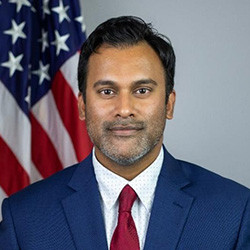
Pranay Vaddi joined CNSP as the inaugural Senior Nuclear Fellow of 2025. Vaddi holds a BS in Biochemistry and BA in Political Science from the University of Rochester, and a JD from the University of Pittsburgh School of Law.
From May 2022 to January 2025, Vaddi served as special assistant to President Joe Biden and as senior director for Arms Control, Disarmament, and Nonproliferation at the National Security Council. Prior to this, he served as a senior advisor in the Bureau of Arms Control, Verification, and Compliance at the Department of State, where he coordinated the department’s inputs for the 2022 Nuclear Posture Review. Previously, he was a fellow in the Nuclear Policy Program at the Carnegie Endowment for International Peace, where he focused on developing recommendations for the U.S. nuclear posture and arms control policy, and examined Congress’ role in arms control.