

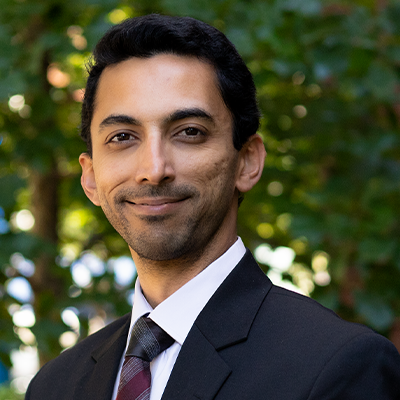
Muhammad Omar Afzaal is a 2026-2027 Stanton Nuclear Security Postdoctoral Fellow in the MIT Security Studies Program’s Center for Nuclear Security Policy. He served as a Visiting Assistant Professor of Government at Bowdoin College in 2025/26.
Dr. Afzaal’s scholarly expertise is in nuclear strategy, limited war, and civil-military relations. His research focuses on tacit bargaining between rival states to manage escalation and the causes of unintended conflict.
His book project focuses on escalation management under a nuclear shadow. Despite states using cross-border violence in protracted territorial disputes, why do only some skirmishes escalate to war? What facilitates and what disrupts conflict management and escalation control? Afzaal argues that adversaries tacitly work together to limit escalation on the battlefield. His research demonstrates that civilian intervention in battlefield decision-making disrupts this tacit escalation management, resulting in escalation. At MIT, Dr. Afzaal extends his work on tacit escalation management to understand the stability-instability paradox, which is core to rethinking the limits of nuclear deterrence. His research explains the puzzle of why and how nuclear rivals engage in tacit bargaining towards predictable conventional behavior if conventional predictability is expected to undermine nuclear deterrence. In doing so, he addresses how tacit bargaining shapes the credibility of nuclear postures.
Dr. Afzaal’s related work on Pakistan’s Strategic Imagination of Civil-Military Relations is forthcoming in “Insecurity and Ambition: Understanding Pakistan’s Strategic Debates,” an edited volume by Georgetown University Press. He shows that political elites tacitly eschew security policymaking in exchange for military support in forming or retaining the government.
His research was awarded the USIP-Minerva Peace and Security Scholar Fellowship by the United States Institute of Peace, the Joukowsky Summer Research Award from Brown University’s Watson School of International and Public Affairs, and the Graduate Research Fellowship from the Saxena Center for Contemporary South Asia.
Dr. Afzaal holds a BA in Economics from Grinnell College, along with a Masters in Public Affairs, a Master of Arts in Political Science and a Ph.D. in Political Science all from Brown University.
Contact: moafzaal@mit.edu | Office: E40-492
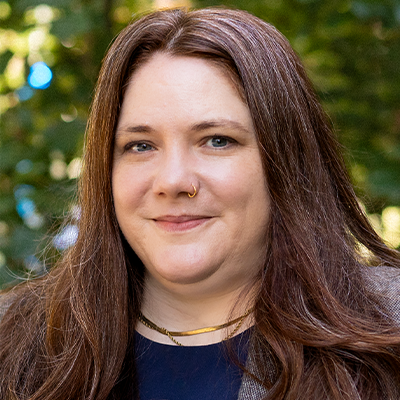
Hannah Haegeland is a 2026-2027 Stanton Nuclear Security Postdoctoral Fellow in the MIT Security Studies Program’s Center for Nuclear Security Policy. She is also a Non-Resident Fellow at the U.S. National Nuclear Security Administration’s Sandia National Laboratories’ Cooperative Monitoring Center where she previously directed South Asia research and engagement and some work in the Middle East. She researches nuclear issues and the global history of strategic technology in Asia. Her book project, Before the Bomb: Nuclear Latency in Pakistan (1947-98), is a new history of global Cold War nuclear development. In it, she explores how, why, and to what effects regional states develop the capacity to build a nuclear weapons force. Pakistan’s pre-bomb history illustrates how early nuclear development shapes later technical development and strategic thinking about the utility of nuclear science and technology in international affairs. Haegeland earned her PhD at Johns Hopkins University jointly from the Departments of the History of Science and Technology and Political Science, and her MA in South Asia Studies from the University of Washington’s Jackson School of International Studies. From fall 2025 to fall 2026 she was a Research Fellow at the Harvard Kennedy School’s Belfer Center International Security Program and Project on Managing the Atom. Before returning to academia, she held research and teaching positions in Washington, D.C., Seattle, New Delhi, and Kathmandu focused on the security and history of South Asia.
Contact: hhaegel@mit.edu | Office: E40-462
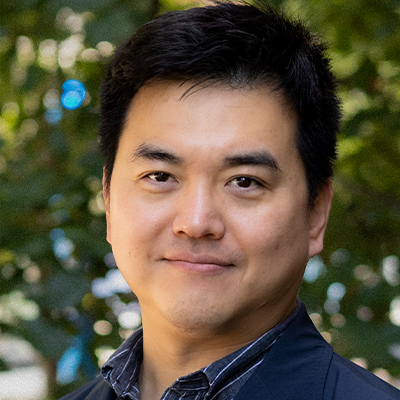
Do Young Lee is the 2026-27 Stanton Nuclear Security Junior Faculty Fellow in the MIT Security Studies Program’s Center for Nuclear Security Policy. His research focuses on nuclear weapons, extended deterrence, alliance politics, and the diffusion of military technology. Prior to joining CNSP, he served as a postdoctoral fellow (equivalent to assistant professor) in the Department of Political Science at the University of Oslo and as a postdoctoral fellow at the Institute on Global Conflict and Cooperation at the University of California, San Diego. He earned my PhD in Political Science from the University of Chicago and my MA and BA from Korea University.
Contact: Doyoung@mit.edu | Office: E40-490