
Michael E. O'Hanlon & Caitlin Talmadge | Brookings Institution
March 2, 2026
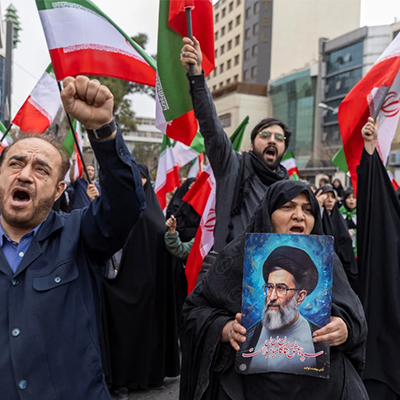
Michael E. O'Hanlon & SSP's Caitlin Talmadge wrote "Airpower’s track record in attempting regime change" in "After the strike: The danger of war in Iran" for Brookings Institution.
Airpower’s track record in attempting regime change
Trump has unleashed American airpower as part of a combined U.S.-Israeli operation, not only to further damage Iran’s nuclear program after last June’s successful attacks, but also with the aspiration of overthrowing the Iranian regime. That is an understandable goal—but a very high bar. Consider the recent track record of similar missions:
In Kosovo in 1999, NATO wasn’t seeking regime change; it wanted to protect the ethnic Albanian population of the Kosovo region of Serbia against the militias of Serb strongman Slobodan Milošević. It achieved that goal, but it had to bomb with roughly 10 times as many planes as initially forecast for roughly 10 times longer than expected.
In Afghanistan in 2001, where the United States overthrew the Taliban, U.S. airpower did not act alone, but in conjunction with American special forces and CIA operators, together with an Afghan resistance group, the Northern Alliance.
In Iraq in 2003, the United States and its allies tried to kill Saddam Hussein on the opening night of the war with a “shock and awe” attack, followed by a rapid ground invasion. These attempts at a quick victory did lead to Saddam’s overthrow, but created a chaotic environment that bogged down the United States for more than half a decade. Could the same kind of thing, heaven forbid, happen in Iran? The Trump administration says no—but George W. Bush was not looking for a multiyear ground presence in Iraq, either.
In Libya in 2011, NATO airpower supported resistance forces trying to protect civilians against Moammar Gadhafi’s depredations. NATO eventually succeeded, and within a few months, Gadhafi was dead at the hands of internal foes. But 14 years later, Libya remains anarchic. Moreover, our allies on the ground in Libya were much stronger than any Iranian internal opposition is today.
From 2014 through 2019, the United States and allies used airpower and advisors to help local allies defeat ISIS in Iraq and Syria. But it took half a decade, and it required strong partners on the ground.
To defeat Hamas in Gaza, Israel bombed for more than two years and used lots of troops on the ground as well. Hamas is much weaker but still not dead.
The impulse to overthrow the Iranian regime is understandable. The historical track record suggests the path ahead will be very difficult and slow. And even if the U.S. achieves its stated objectives, peace and stability are far from guaranteed.