
Matthew Sharp | Bulletin of the Atomic Scientists
June 26, 2026
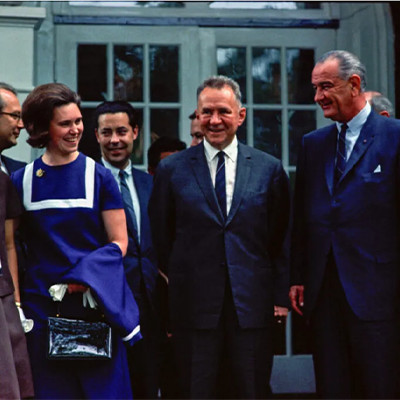
CNSP's Senior Nuclear Fellow, Matthew Sharp, examines "three events have been central to US and international nuclear policy for a generation and remain significantly relevant to current policy challenges," in his latest analysis for the Bulletin of the Atomic Scientists.
In the space of a few years in the late 1960s, US policymakers debated and set US policy on three issues that subsequently formed the basis of US nonproliferation and arms control policy: A senior group in 1965 decided that nonproliferation should be an overriding US policy interest. President Lyndon Johnson’s advisors developed the conception that diplomacy to constrain nuclear arsenals (arms control) should be advanced as a preferred alternative to armament at the 1967 Glassboro Summit with the Soviet Union. And in 1968, negotiators of the Nuclear Non-Proliferation Treaty (NPT) reached an understanding of the linkage between nonproliferation and disarmament in that treaty, and the means for enforcing that linkage.
The conclusions from these three events have been central to US and international nuclear policy for a generation and remain significantly relevant to current policy challenges. But today’s US policymakers seem to have forgotten or dismissed the logic that their predecessors found compelling. They must be reminded of these moments, but not without reflection: Policymakers must revisit those earlier debates and assess whether today’s context requires changes in core US policy positions.
From the Bulletin of the Atomic Scientists