
Logan Mintz & Matthew Sharp (CNSP) | Lawfare
September 20, 2026
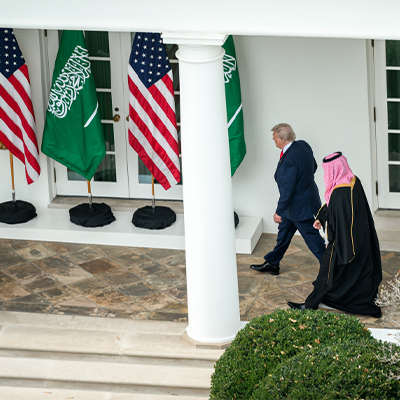
"The situation in Iran is just the latest example of how an indigenous enrichment program without robust safeguards can exacerbate regional tensions and ensnare U.S. resources," writes Matthew Sharp (CNSP's Senior Nuclear Fellow) and Logan Mintz for Lawfare.
The U.S.-Saudi civil nuclear cooperation agreement that the Trump administration has just delivered to Congress falls short of two key nonproliferation standards: At Saudi insistence, it does not outright prohibit Saudi Arabia from enriching uranium domestically, nor does it require the strongest international verification standard—the International Atomic Energy Agency’s (IAEA’s) Additional Protocol (AP). The omission of these standards is at the core of opposition to the deal from some nonproliferation champions, who argue that it “compromises essential nonproliferation guardrails.”
Some proponents of civil nuclear cooperation with Saudi Arabia contend that rigid insistence around the norm of including the AP and barring domestic enrichment in civil nuclear agreements (also known as 123 agreements) can be self-defeating if it makes cooperation—and therefore the expansion of U.S. influence—impossible. Alternatives to these long-standing norms are possible, but they should be pursued only if they are better than the existing standard. We are open to the argument made by supporters of the U.S.-Saudi deal that its provision of a two-year study on the viability of enrichment and a bilateral verification arrangement are a strong alternative to the two norms the deal does not include, but these claims require validation and depend on how the deal is implemented.
During Congress’s 90-day review of the deal, legislators should ask deliberate questions to determine whether the agreement credibly contains the spread of enrichment and implements the highest standards of verification. We have suggested some questions here. If the answers are not credible, then the deal risks weakening the global regime that has for decades prevented the dangerous spread of nuclear weapons. The situation in Iran is just the latest example of how an indigenous enrichment program without robust safeguards can exacerbate regional tensions and ensnare U.S. resources.
From Lawfare