
Luke Broadwater & David E. Sanger | The New York Times
April 9, 2025
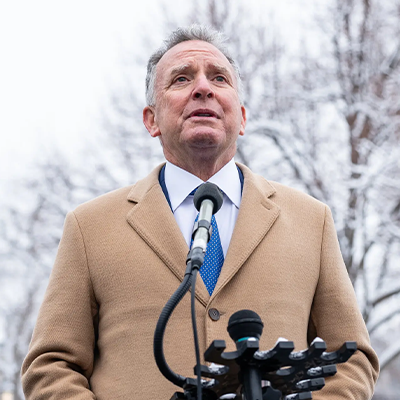
SSP’s senior research associate Jim Walsh, in The New York Times, on Iran coming to the table for this week’s nuclear talks with the U.S.: “Clearly, they’re saying they want to talk. But there’s negotiation, and then there’s capitulation. Is this a list of demands or we get attacked? That’s not going to work.”
In 2016, running for president and pressed for details on how he would handle some of the world’s knottiest security issues, then-candidate Donald J. Trump had a simple formula for defanging the Iranian nuclear program.
Barack Obama’s negotiating team, he said, should have just gotten up from the table and stormed out. The Iranians would have come begging. “It’s a deal that could’ve been so much better just if they’d walked a couple of times,” Mr. Trump told two reporters from The New York Times. “They negotiated so badly.”
Now, at a moment the Iranians are far closer to being able to produce a weapon than they were when the last accord was negotiated — in part because Mr. Trump himself upended the deal in 2018 — the president has his chance to show how it should have been done.
So far, the gap between the two sides appears huge. The Iranians sound like they are looking for an updated version of the Obama-era agreement, which limited Iran’s stockpiles of nuclear material. The Americans want to dismantle a vast nuclear-fuel enrichment infrastructure, the country’s missile program and Tehran’s longtime support for Hamas, Hezbollah and other proxy forces.
What is missing is time.
“It is essential that we reach an agreement quickly,” said Senator Jeanne Shaheen of New Hampshire, the top Democrat on the Foreign Relations Committee, who called Mr. Trump’s decision to pull out of the Iran nuclear deal a “serious mistake.” “Iran’s nuclear program is advancing every day, and with snapback sanctions set to expire soon, we are at risk of losing one of our most critical points of leverage.”
Snapback sanctions allow for the quick reimposition of United Nations sanctions against Iran. They are set to expire Oct. 18.
The pressure is now on for Mr. Trump to get a deal that is far tougher on Iran than what was agreed to during the Obama administration, which will be the measuring stick for whether Mr. Trump reached his own goals. For leverage, his administration is already threatening the possibility of military strikes if the talks don’t go well, though it leaves unclear whether the United States, Israel or a combined force would execute those strikes.
Karoline Leavitt, the White House press secretary, promised Tuesday there would be “hell to pay” if the Iranians didn’t negotiate with Mr. Trump.
“The Iranians are going to be surprised when they find out they aren’t dealing with Barack Obama or John Kerry,” said Senator Jim Risch, Republican of Idaho and the chairman of the Foreign Relations Committee, referring to the secretary of state who oversaw the American negotiations. “This is a whole different ballgame.”
The negotiations begin on Saturday, with Steve Witkoff, the president’s friend and fellow New York real estate developer, reportedly leading the American team. Mr. Witkoff, who is also handling negotiations over Gaza and Ukraine, has no known background in the complex technology of nuclear fuel enrichment, or the many steps to nuclear bomb making.
The first question he will face is the scope of the negotiation. The Obama-era deal dealt only with the nuclear program. It didn’t touch Iran’s missile program — that was under separate strictures by the United Nations, which Tehran ignored — or its support of terrorism.
Michael Waltz, the national security adviser, has said a new agreement with the Trump administration must deal with everything, and that Iran’s vast nuclear facilities must be completely dismantled — not just left in place, running at dead slow, as they were in the 2015 deal.
“Iran has to give up its program in a way that the entire world can see,” he said on CBS’s “Face the Nation” in March. He talked about “full dismantlement,” a situation that would leave Iran largely defenseless: no missiles, no proxy forces, no pathway to a bomb.
Mr. Trump said on Monday that the talks with Iran would be “direct,” meaning U.S. negotiators would interact with their Iranian counterparts. So far the Iranians have a different story: Abbas Araghchi, Iran’s foreign minister, published an essay in The Washington Post on Tuesday saying the country was “ready for indirect negotiations with the United States.” Mr. Araghchi said the United States must first pledge to take a military option against Iran off the table.
“Clearly, they’re saying they want to talk,” said Jim Walsh, a senior research associate at the Massachusetts Institute of Technology’s Security Studies Program. “But there’s negotiation, and then there’s capitulation. Is this a list of demands or we get attacked? That’s not going to work.”
From The New York Times