
Michael O’Hanlon, and Caitlin Talmadge | The National Interest
November 3, 2025
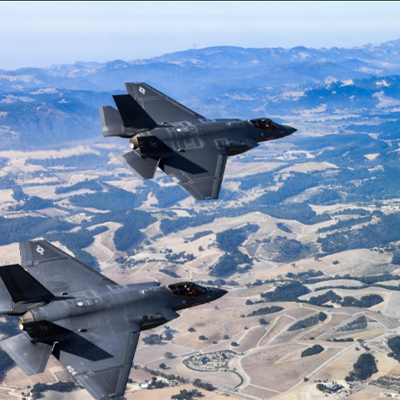
"Historically, even overwhelming air and missile attacks rarely achieve strategic objectives."
- Michael O’Hanlon & SSP's Caitlin Talmadge in The National Interest
Historically, even overwhelming air and missile attacks rarely achieve strategic objectives.
As the Trump administration amasses military force off the coast of Venezuela and hints at conducting air and missile attacks to drive the Maduro regime from power, it is worth remembering not only the capabilities but also the limitations of modern airpower. On balance, the track record is sobering for those who would aspire to achieve dramatic strategic effects with limited use of offshore force.
Consider the Kosovo War of 1999. There, NATO did not try to effect regime change; it simply wanted to protect the ethnic Albanian population of the Kosovo region of Serbia against the marauding militias of Serbian strongman Slobodan Milosevic. It succeeded—but only after increasing initial airpower tenfold and bombing for 77 days rather than the seven or fewer it had first expected.
In Afghanistan in 2001, US airpower was the main kinetic or explosive instrument of power used to topple the Taliban regime. But crucially, CIA operatives and special forces were embedded within the ranks of an Afghan resistance group, the Northern Alliance. That combination proved effective, though it did not defeat the Taliban for good.
In Iraq in 2003, an opening salvo of air and missile strikes attempted to achieve “shock and awe”—and hopefully regime decapitation—against Saddam Hussein. This failed to materialize, and US ground forces got stuck in the country for nearly a decade.
Muammar el-Qaddafi’s depredations. We eventually succeeded, and within a few months, Qaddafi was dead at the hands of internal foes. But if that is what success looks like, we should be wary; 14 years later, Libya remains anarchic.
In 2014, after ISIS seized swaths of Syria and northern Iraq, the United States and its coalition allies successfully used airpower, first to prevent the overthrow of the Iraqi government in Baghdad, then to claw back the territory that ISIS had seized. However, in both phases, as in Afghanistan and Libya, we needed potent allies on the ground—Kurdish peshmerga forces, Iran-backed Shia militias, and, later, a rebuilt Iraqi military. Even so, Operation Inherent Resolve took seven years, three presidential administrations, and tens of thousands of bombs to extinguish ISIS forces in Iraq.
In 2020, President Trump authorized a strike to kill Iranian terrorist mastermind Qassim Suleimani when he visited Baghdad, Iraq. Given all the blood on Suleimani’s hands, that decision was justified. And while the strike did weaken Iran’s Quds Force, it neither neutralized Iran’s threat nor brought about regime change.
To defeat Hamas in Gaza, Israel bombed the Strip for two years, with significant deployments of troops on the ground. And Hamas is still not quite dead. Israel’s recent use of airpower in Lebanon against Hezbollah may offer a more hopeful model. Much of the leadership of that group has by now been annihilated. But again, Hezbollah is hardly gone for good, even if it does seem deterred for now.
The simple reality is that dictators prioritize staying in power, and they tend to excel at it. Bombing their territory neither encourages the oppressed people to rise in a revolution nor incentivizes elites to turn on the regime in a coup.
Modern airpower and missiles can indeed cause immense destruction to enemy targets—but usually only after years of effort. Even then, success on the ground is ensured in conjunction with substantial allied or US armed forces, a condition that does not hold in Venezuela’s case. President Trump has long argued against America’s forever wars in Iraq and Afghanistan. He needs to be careful not to get drawn into a similar situation in the Western Hemisphere.