
Eric Heginbotham | Quincy Institute for Responsible Statecraft (QI)
October 21, 2025
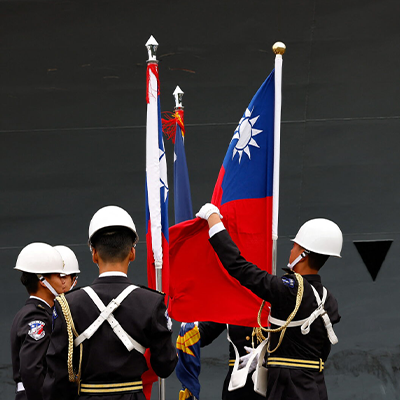
SSP's Eric Heginbotham, Bonnie Glaser, and Jake Werner discuss the advantages and disadvantages of such a significant change in policy, in a recent webinar hosted by Michael Swaine for Quincy Institute for Responsible Statecraft (QI).
Preventing Taiwan War: Is Strategic Ambiguity Still Working?
Despite uncertainty in the Trump administration’s China policy, dangerous trends across the Taiwan Strait continue to raise the chance of crisis. Tensions are deepening in the overall U.S.–China relationship, and the credibility of Washington’s One China policy and Beijing’s support for peaceful unification is mutually eroding. While China continues to expand its military capabilities and intimidate Taiwan, the U.S. is keen to mobilize its regional alliances to enhance warfighting against China.
These developments raise the question of whether the longstanding U.S. policy of strategic ambiguity, which contains the possibility of U.S. military intervention to defend Taiwan against China, remains the best approach to preventing war over the island.
Quincy Institute senior research fellow Michael Swaine recently published two policy briefs arguing that Taiwan is not a sufficiently vital interest for the United States to go to war over. He contends that Washington should begin transitioning to a policy beyond strategic ambiguity — a new approach that seeks to enhance support for Taiwan but rules out the possibility of joining a war over the island.
To discuss the advantages and disadvantages of such a significant change in policy, we invite you to join a webinar featuring Swaine, Eric Heginbotham, principal research scientist at MIT’s Security Studies Program, and Bonnie Glaser, managing director of German Marshall Fund’s Indo-Pacific Program. Jake Werner, director of Quincy Institute’s East Asia Program, will moderate.
The conversation will take place on Tuesday, October 21st from 12:00 – 1:00 PM Eastern Time.