
SSP News
June 7, 2025
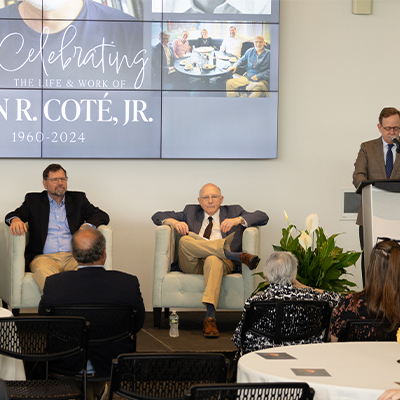
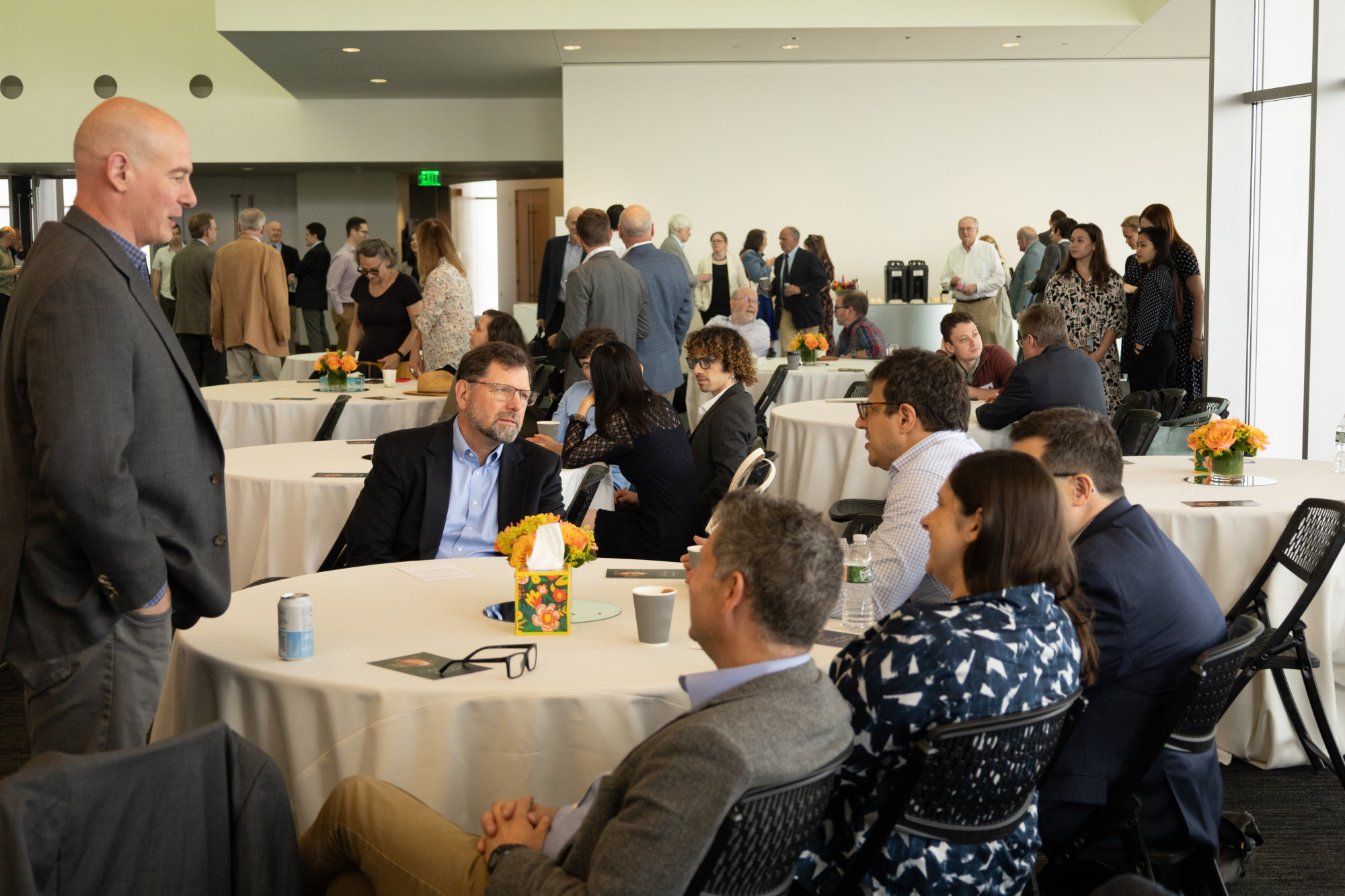
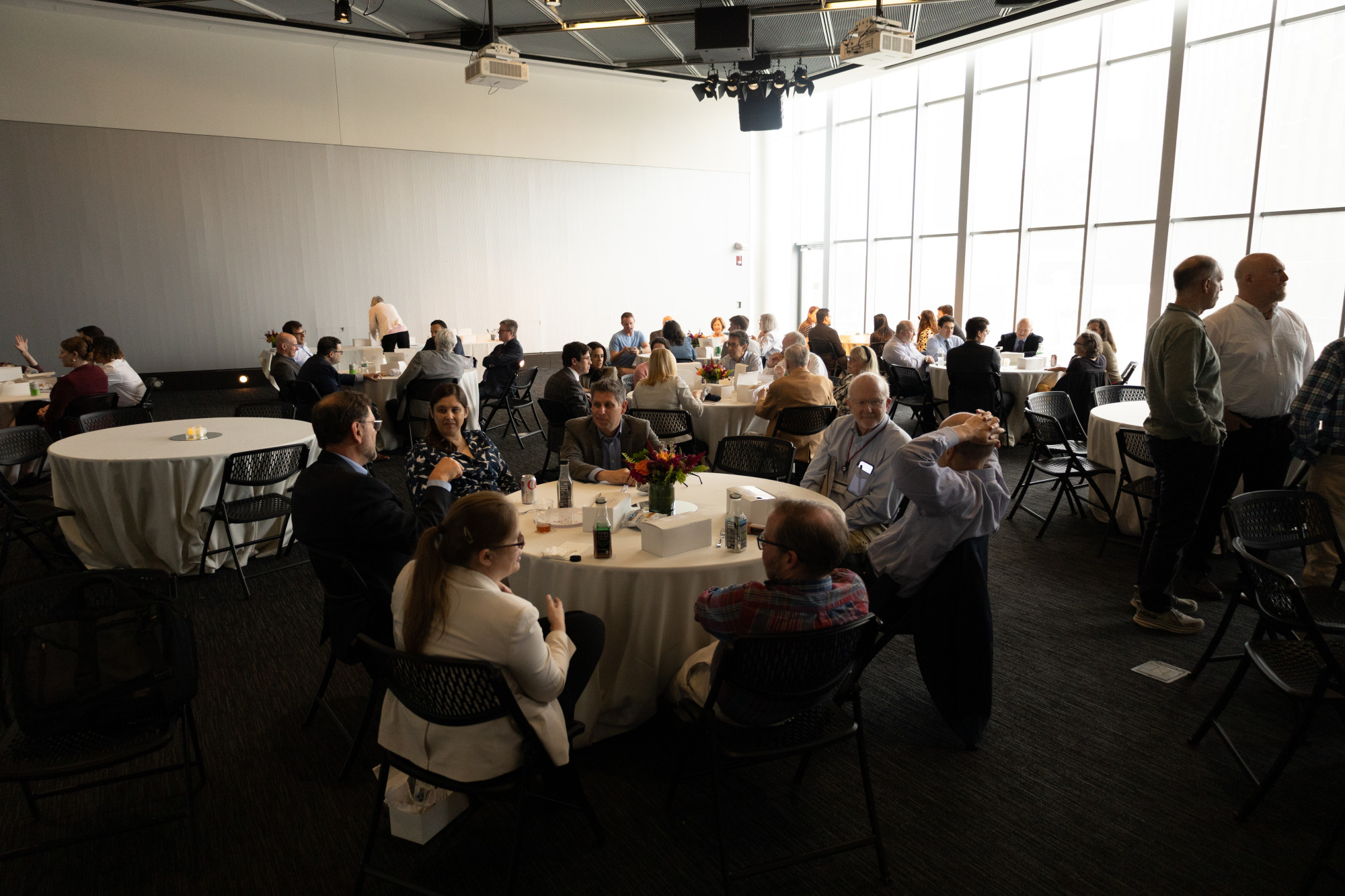
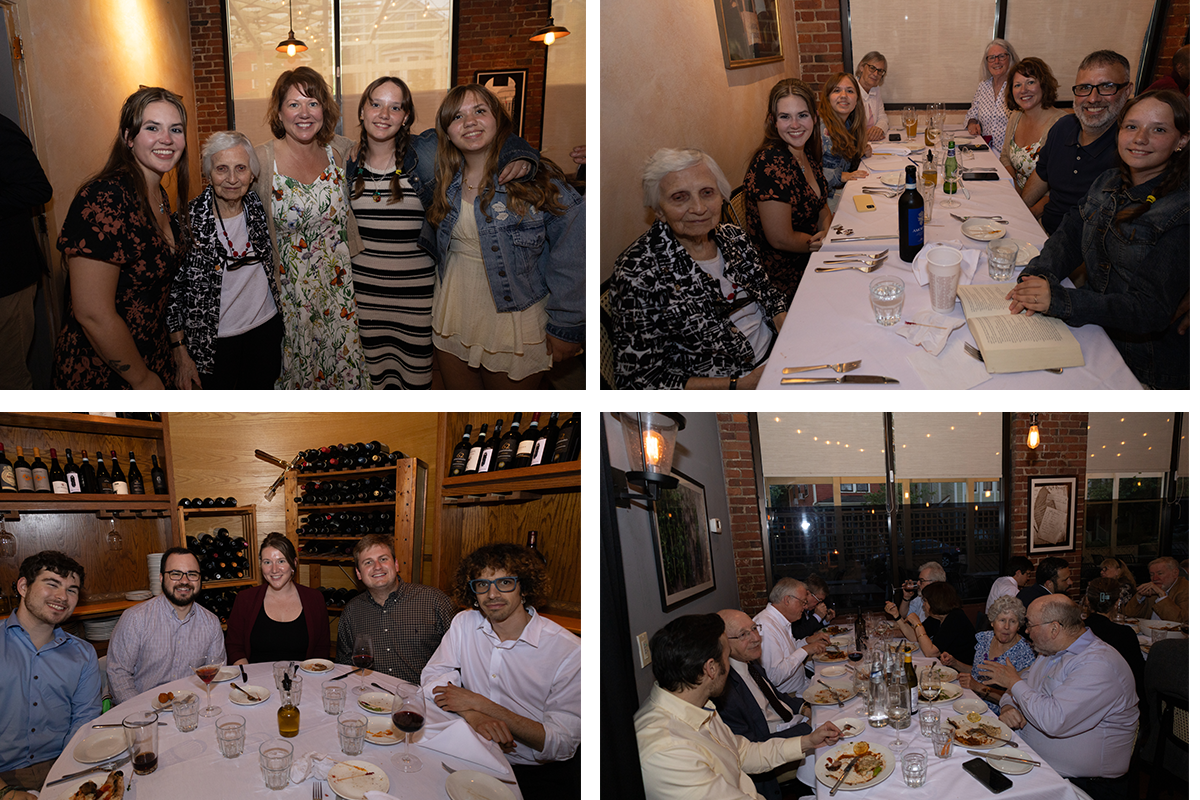
Recently, the SSP community celebrated the life and work of Owen Coté, former associate director of SSP, over a two-day period. On June 6, colleagues gathered to workshop Owen’s unfinished book. Then on June 7, we hosted a day-long memorial including panel discussions on his contributions to scholarship, teaching, and service, followed by a dinner at Owen's favorite restaurant in Cambridge, Gran Gusto.
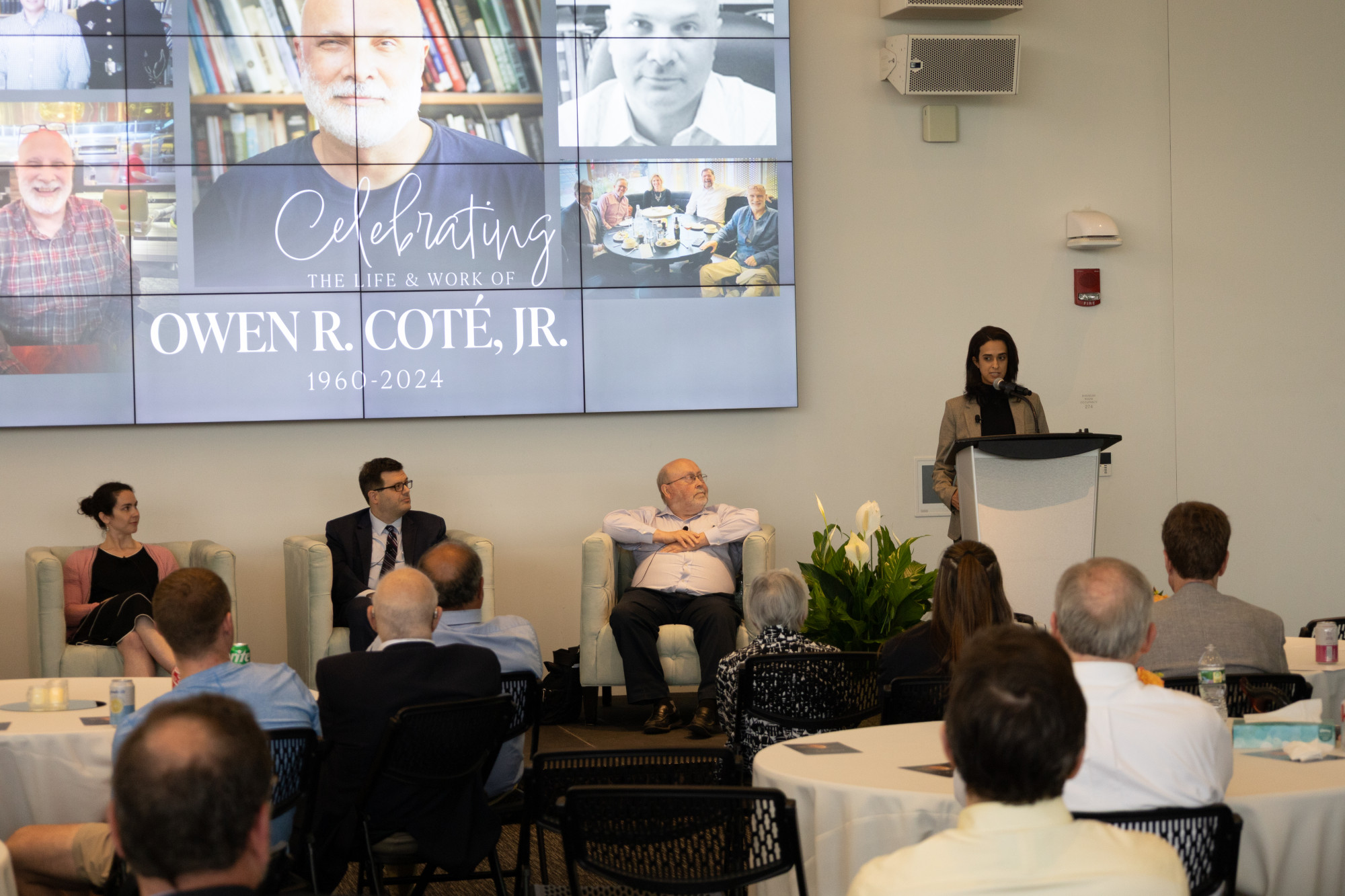
Family, friends, and colleagues gathered on June 7, 2025 to celebrate the life and scholarship of Owen Coté Jr. Former students and colleagues led two panels, highlighting Owen’s life's work and the large impact he made in the field of security studies and international relations and in the lives of all who knew him.
The first panel, led by Barry Posen, Austin Long, Caitlin Talmadge, and Phil Haun, discussed Owen’s contributions to scholarship. The panelists’ remarks, as well as the Q&A session that followed, largely revolved around two major themes: (1) the broader nature of Owen’s singular intellect, and (2) the specific streams of scholarship Owen helped shape.
On the former, several attendees highlighted Owen’s unmistakable eclecticism—able to forge novel connections between seemingly disparate bodies of literature, theoretical frameworks, or bits of information. In so doing, he ardently practiced his belief that in order to understand one thing, you needed to understand everything that enabled it or interacted with it. Many remarked upon Owen’s unique ability to situate the technical within the tactical, the operational within the strategic, and the particular influence of complex organizational dynamics. They further noted Owen’s resistance to overly-deterministic “theories of everything”. Instead, Owen was first and foremost motivated by the facts—and the process of hunting those facts down. Owen was an unusually talented fact-finder, penetrating topics carefully designed to be impenetrable (e.g., strategic submarines), and he was a vacuum for whatever knowledge he could uncover. Armed with these asymmetric advantages in both intelligence and information, Owen excelled as an intellectual “counterpuncher”, a term several speakers used to describe how easily and eagerly Owen would poke large holes in others’ arguments.
The panel then discussed how Owen used these skills to advance our understanding of modern military organizations, how they prepare for war, and how they adapt when war comes. This conversation coalesced around Owen’s core research focuses, namely: the evolution of naval power since the 17th century, the strategic undersea competition during the Cold War, and the role of anti-submarine warfare in ongoing U.S.-China competition. Among several lasting contributions made by Owen, the panelists noted his landmark characterization of “three-dimensional” naval warfare, which he said emerged in the early 20th century with the advent of submarines and aircraft. Perhaps receiving the most attention was Owen’s research on subsurface warfare, and in particular his monograph, The Third Battle, which revised a core assumption underlying decades of nuclear scholarship. The panelists agreed that The Third Battle—now over 20 years since its release—still offers the richest account of undersea competition during the Cold War. The panel further noted Owen’s additional work on space and air power, as well as on undersea competition between the United States and China. Lastly, the panelists discussed their work editing a major manuscript Owen left behind, on the historical evolution of sea power. Altogether, the panel helped illuminate the talents and traits that made Owen an incomparable scholar, and the singular impact he has made—and will continue making—on the field of security studies.
The second panel, led by Steve Miller, Fiona Cunningham, Lena Andrews, and Brendan Green, focused on Owen’s teaching, mentorship, and service to international relations scholarship. All of the panelists spoke to different aspects of their relationships with Owen, but what rang true throughout was Owen’s deep commitment to his students, his love for learning and sharing his knowledge with others, and the joy he brought to his students and colleagues.
In the classroom Owen’s depth of knowledge and love of the material enabled students to learn about the complexities of military operations and military technologies. Owen did not teach students what to think, but rather how to think and approach different problems in the field. One former student described the process of Owen’s teaching like learning a foreign language, as his relentlessness push for students to understand the foundational details of whatever they were studying led to a new understanding and vocabulary that had previously been indecipherable. His drawings and handouts on air-to-air combat or underwater acoustics, which students regularly followed but Owen never had to reference himself, helped bring greater clarity to many opaque areas of study. Owen sought to impart on his students that the fun part of doing research was figuring out how things worked, and anything else that came from the work was extra.
Owen’s commitment to teaching was not confined to the classroom. Known for always having his door open (even on the weekends) former students recalled the uncountable number of hours Owen spent with them outside of class. As patient as he was brilliant, Owen would guide and advise students on their projects, reinforcing to them how the smallest details could make all the difference for their work. Panelists also recalled how Owen combined his love for food and for teaching, regularly taking students out for meals at some of his favorite restaurants in Cambridge. Whether in the classroom or at the dinner table, Owen was always himself. He led by example by treating others with kindness and respect regardless of their pedigree, and by persevering through life’s challenges, showing students how to endure challenges in their own lives. Sometimes without even knowing it themselves, students were always being taught and mentored by Owen.
Less known in comparison to his teaching and scholarship, Owen also played a vital role as an editor for International Security for over 30 years. Owen’s contribution to articles published in IS is simply immeasurable. He dedicated so much of his time to the journal because he loved the work, bringing his sense of humor and intelligence with him to every editor meeting. Owen’s dedication to the field and the journal is incomparable; he participated in his last journal meeting only two weeks before he passed.
It is hard to capture the life of a person with as large of an intellect and personality as Owen. He was a man who loved his family, his work, and his students. His laugh was known to fill a room, and he could bring a smile to a friend’s face without even saying a word. As one speaker summarized best, Owen was a special person, a dear friend to many, and impossible to replace.
To honor Owen’s memory and scholarly contributions, SSP is establishing an award that will bear his name. The Owen Coté, Jr. Award will be given annually to recognize the best scholarly article in the field of security studies published in the previous calendar year. The award will include a cash prize and be presented to the author at SSP’s annual spring dinner. If you would like to contribute, donations can be made here.