
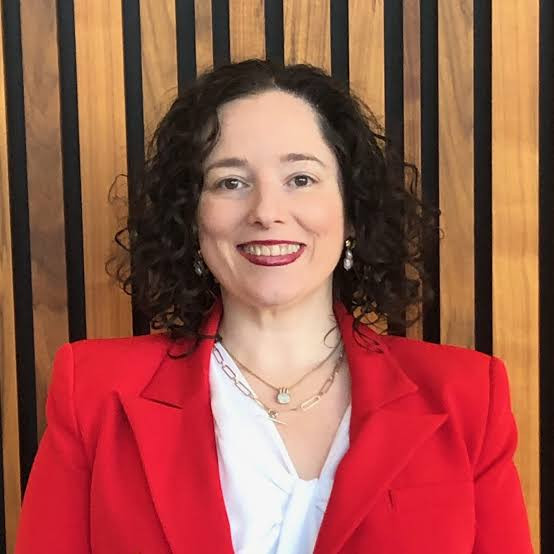
Kelly Grieco
Stimson Center
December 2, 2026 12:00-1:30pm E40-496
Summary:
The prevailing theory of airpower rests on two core propositions. First, air superiority is necessary for victory, winning the contest for the medium and high-altitudes—fighter against fighter, and fighter against surface-to-air missile—enables strategic attack, and strategic attack compels political concessions. Second, once that contest is won, whatever still threatens from below it is a force protection problem, a matter of defending aircraft on the ground and personnel, rather than a continuing contest for control of the air. The U.S. war with Iran tested both propositions—and both failed. The United States achieved and maintained air superiority as the theory defines it, using it to strike the full range of strategic targets, including Iran’s senior leadership. Yet these attacks neither produced operational or strategic paralysis nor compelled political concessions. Instead, while the United States controlled the blue skies, Iran denied the air littoral—the low-altitude airspace, e.g. typically below 15,000 feet—using dispersed, numerous, and mobile missiles and drones to keep the Strait of Hormuz closed and end the war on Iranian terms. This talk develops an alternative theory of air control centered on the air littoral and air denial, emphasizing distributed rather than integrated air defense, and explores the implications for airpower theory, U.S. strategy, and force design.
Bio:
Kelly A. Grieco is a Senior Fellow with the Reimagining US Grand Strategy Program at the Stimson Center, where she researchers US foreign policy and defense policy, addressing questions about military strategy, force structure, alliances, air operations, and the future of war. Her work focuses on the future of airpower, including air denial, drone warfare, and emerging operational concepts, as well as the role of U.S. alliances and security architectures in the Indo-Pacific and Europe. Her research has appeared in Foreign Affairs, Foreign Policy, The New York Times, Lawfare, War on the Rocks, Defense News, Breaking Defense, The Washington Quarterly, International Politics, Parameters, Strategic Studies Quarterly, The Los Angeles Times, among other publications. In 2024, she received the Christopher Coker Prize for the best paper in security studies for the co-authored article "Can Drones Coerce?" published in International Politics. She is also an Adjunct Professor in the Center for Security Studies at Georgetown University. Before joining the Stimson Center, she was a Senior Fellow with the New American Engagement Initiative in the Atlantic Council’s Scowcroft Center for Strategy and Security and an Assistant Professor at the Air Command and Staff College. She holds a Ph.D. in Political Science from the Massachusetts Institute of Technology.